TechXSherpa implements Odoo customizations to streamline finances and enhance visibility
Client
A fast-growing Fintech platform providing accounting automation to a rapidly expanding customer base.
| Industry | FinTech | Business Type | SAAS |
|---|---|---|---|
| Services | Bookkeeping, Accounting, Automation | Build Your Idea | Let's Talk |
The Challenge: Scalability, Control, and Integration Gaps
The client initially relied on a standard 3rd party off-the-shelf accounting software for managing the financial ledger aspects supporting their core platform operations. As their user base and transaction volume surged, this approach began presenting significant challenges:
The Solution Under Development: A Tailored, Integrated Odoo Accounting Ledger
TechXSherpa was selected to architect and implement a custom accounting ledger system, leveraging Odoo's flexibility through strategic Odoo customization.
Odoo was chosen for its:
- Robust Core Financial Engine: Providing a solid foundation for accounting principles.
- Open-Source Flexibility: Allowing deep customization and integration without vendor lock-in.
- Modular Architecture: Enabling the use of the Accounting module while integrating seamlessly with other custom-built components.
- Projected Cost-Effectiveness: Offering a significantly better long-term TCO compared to scaling SaaS accounting licenses.
- Active Developer Community: Ensuring ongoing support and availability of expertise.
Our Implementation is Focusing On:
Core Ledger Functionality
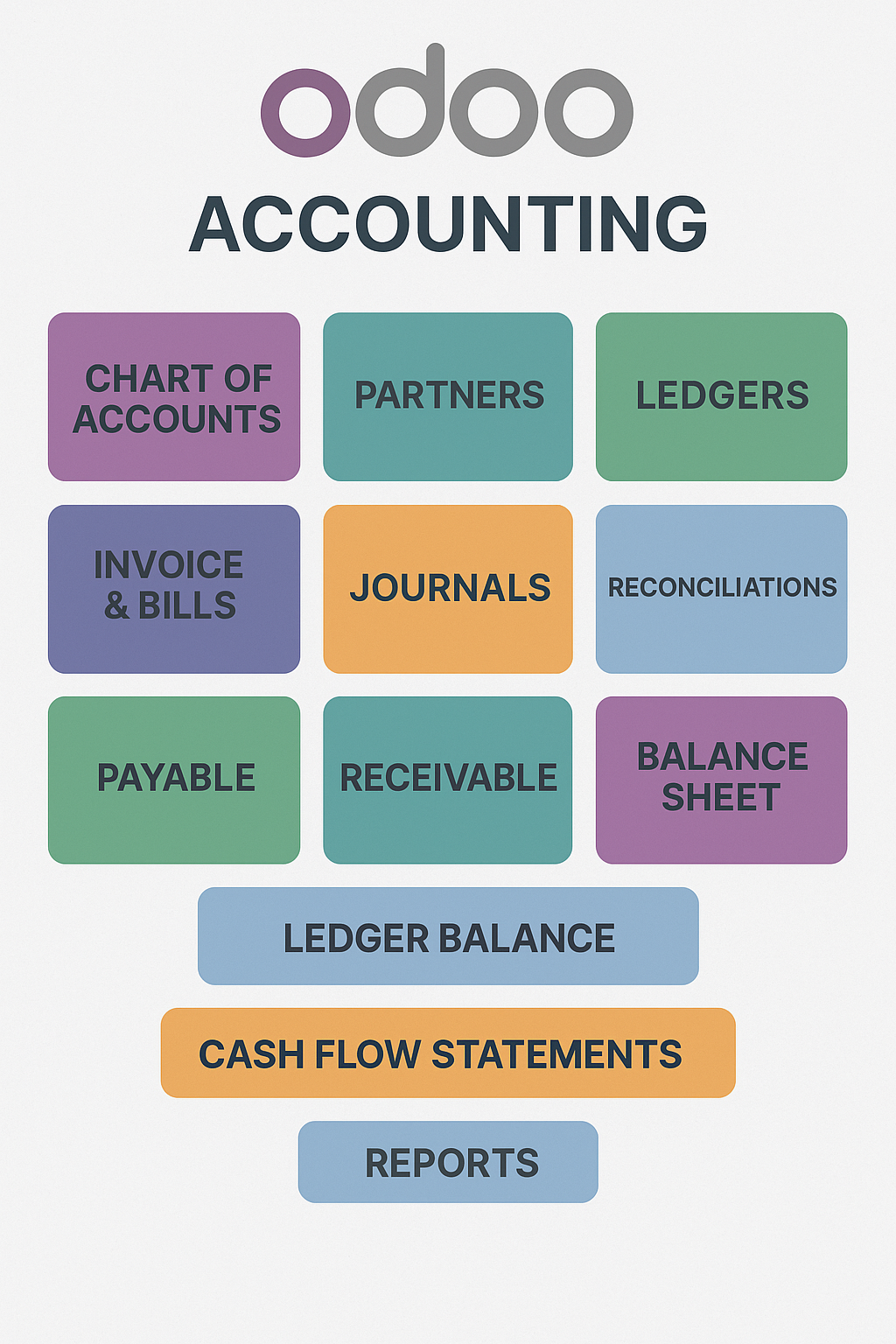
- Configuring Odoo's multi-company features to create a secure multi-tenant environment within a single database. This isolates financial operations and data securely for each client entity, preventing cross-tenant access while allowing for centralized management.
- Customizing the Odoo Accounting module to create a tailored Chart of Accounts (COA) reflecting the platform's specific entities and transaction types.
- Mapping Odoo's Partner model (Customers/Vendors) directly to the platform's internal user and entity types for seamless data consistency.
- Developing automated workflows for generating Invoices and Bills triggered by specific platform events.
- Leveraging Odoo's inherent payment reconciliation features, tailoring them to the client's workflow, enabling the matching of recorded payments against invoices/bills managed within Odoo and creating the necessary journal entries.
- Implementing the standard Journal Entry features within Odoo, allowing the finance team to accurately record necessary accounting transactions.
Integration & Data Pipeline:
- Building an event-driven architecture designed to ensure near real-time, bi-directional synchronization between the platform's operational database and the Odoo ledger.
- Developing a lightweight microservice (using Python and PostgreSQL) acting as an intermediary/API gateway for controlled data exchange.
- Implementing comprehensive logging and audit trails for all ledger interactions, designed to satisfy compliance requirements upon deployment.
Analytics & Reporting Capabilities:
- Configuring standard Odoo financial reports, including Balance Sheet, Profit & Loss, and Ledger Balance reports, tailored to the client's multi-company structure and customized COA, providing essential financial overviews.
- Exposing secure API endpoints designed to allow the client to feed structured ledger data into their internal Business Intelligence tools for deeper, custom analytics.
- Enabling tag-based classification of ledger entries for granular reporting and multidimensional financial insights.
Key Challenges Being Addressed During Implementation:
Defining the Precise Scope
Carefully analyzing usage of the previous accounting tool to isolate only the essential features needed, avoiding the trap of rebuilding unnecessary complexity through close collaboration with the client's internal teams.
Ensuring Data Consistency
Designing a robust event-driven system with appropriate error handling, retry mechanisms, and monitoring to guarantee data integrity between the platform and Odoo.
Planning for Seamless Data Migration
Strategizing a phased migration of relevant historical financial data from the legacy tool to Odoo, focusing on ensuring accuracy, completeness, and maintaining audit trails during the transition.
Performance Optimization
Tuning the Odoo database (PostgreSQL) and the integration layer proactively to handle the anticipated high volume of transactions generated by the fintech platform without performance degradation.
Kikstart Your Dream Project With Us
Projected Results & Anticipated Impact:
The migration to this integrated Odoo solution is poised to deliver significant strategic advantages upon full deployment:
- Projected Major Cost Savings by Eliminating Per-User Licensing: Eliminating the escalating subscription fees from the previous tool is expected to provide immediate and substantial savings.
- Unified & Improved User Experience: The solution is designed so that end-users will interact with financial information directly within the familiar platform interface, removing friction and improving satisfaction.
- Full Control & Data Ownership: Upon completion, the client will gain complete control over their financial ledger data, workflows, and business logic, enhancing security and simplifying compliance.
- Enhanced Financial Visibility: The system will provide internal teams with near real-time access to accurate ledger data, enabling faster decision-making and operational adjustments.
- Increased Agility: The custom Odoo module framework developed will allow the client to rapidly implement new financial features, rules, or integrations without being constrained by third-party limitations.
- Future-Proof Foundation: The modular Odoo solution provides a scalable base for future innovations, such as offering financial APIs to their own users or expanding embedded finance capabilities.
Technology Stack
- Core Ledger: Odoo (Customized Accounting Module)
- Integration API Layer: Python
- Database: PostgreSQL (for Odoo & Integration Service)
- Ledger Sync and Integration: Event-Driven Architecture (Microservice & APIs)
- Reporting: Odoo Standard Reports, Custom API Endpoints
- Cloud: AWS
Conclusion
By partnering with TechXSherpa to replace their previous accounting software with a custom-built Odoo ledger, the fintech client is successfully transforming a significant operational challenge into a strategic advantage. The project positions them to achieve substantial cost savings, regain control over critical financial processes, enhance their platform's user experience, and benefit from greater agility and future growth. This ongoing project demonstrates the power of leveraging Odoo's flexibility for building deeply integrated, mission-critical financial systems through expert Odoo customization services.